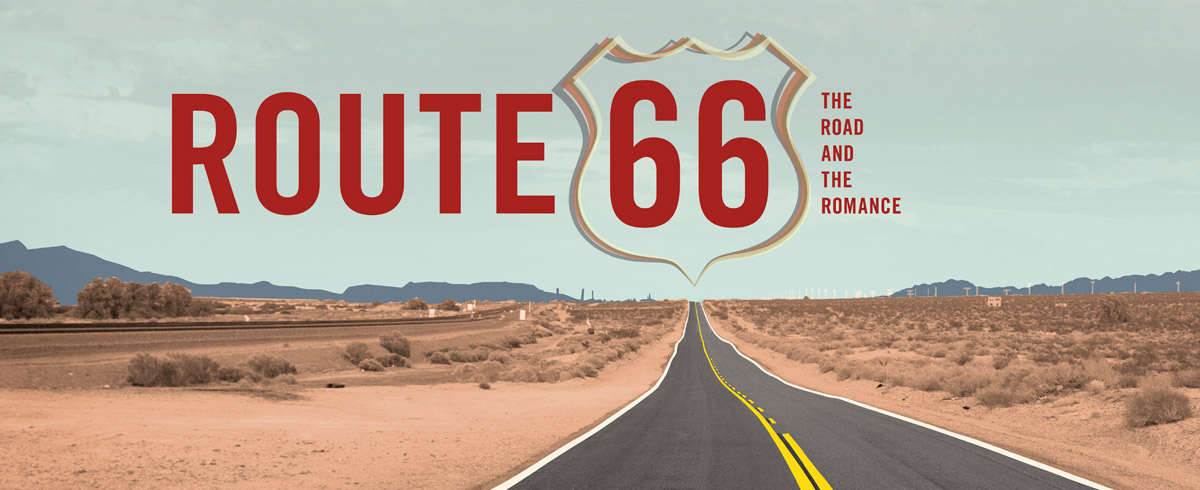
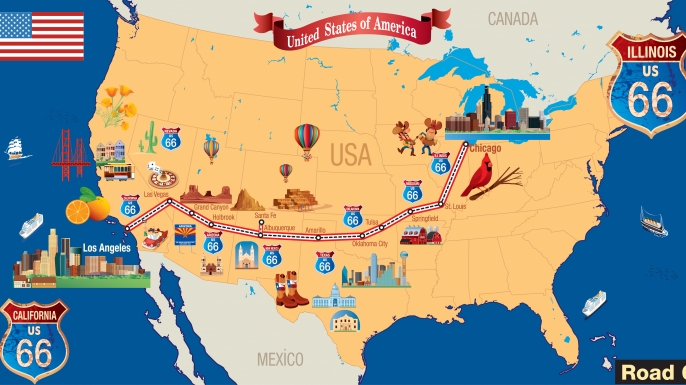
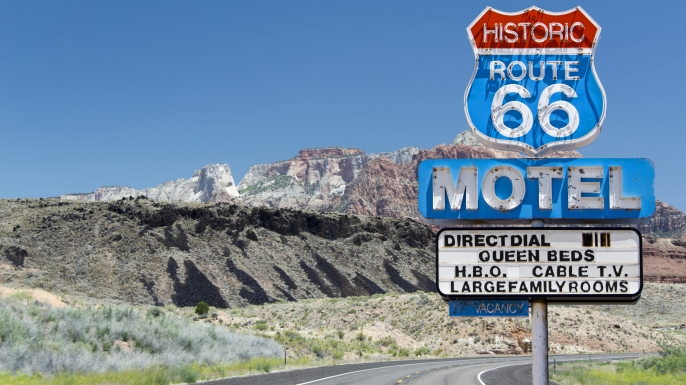
One of America’s most iconic highways, Route 66 stretched 2,448 miles
from Chicago to Los Angeles. Pieced together in 1926 from existing
roads, it wound through Illinois, Missouri, Kansas, Oklahoma, Texas, New
Mexico, Arizona and California. Dust Bowl migrants headed west on the
roadway in the 1930s, while tourists flocked to its mom-and-pop
businesses and kitschy attractions in the 1950s. The two-lane highway
was memorialized in literature (“The Grapes of Wrath”) and song (“Get
Your Kicks on Route 66”) and came to symbolize freedom and adventure.
Explore the celebrated roadway, which was made obsolete by high-speed
interstates and decommissioned by the federal government in
1985—although much of it remains drivable today.
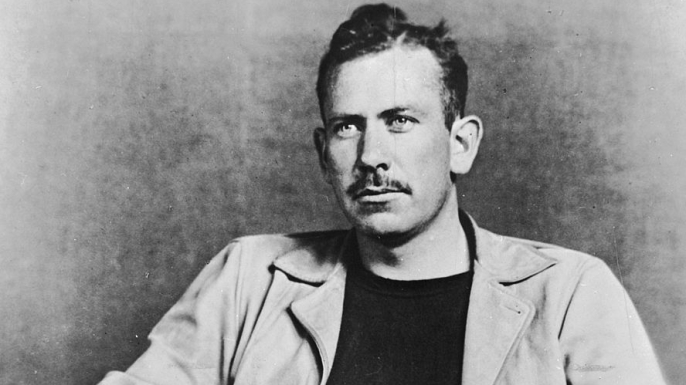
1. John Steinbeck gave it one of its most famous nicknames
In his Pulitzer Prize-winning 1939 novel “The Grapes of Wrath,” about
Dust Bowl migrants of the 1930s, Steinbeck devoted a chapter to Route
66, which he dubbed “the mother road,” a nickname that stuck. Like the
bestselling book’s displaced farm family, the Joads, thousands of
real-life Americans fled drought and poverty in Oklahoma, Texas and
neighboring states during the Great Depression and traveled west along
Route 66 in search of employment. Contrary to myth, Steinbeck never
ventured from Oklahoma to California with migrants as part of his
research for “The Grapes of Wrath,” although the author did drive west
on Route 66 with his wife in 1937.
2. Part of Route 66 follows the Trail of Tears
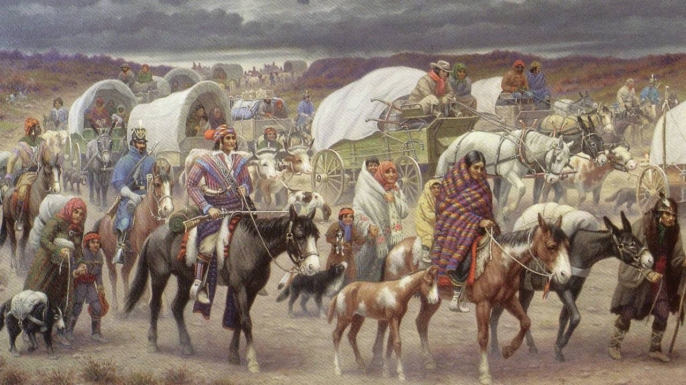
A portion of Route 66, from Rolla to Springfield, Missouri, overlaps
with part of the northern route of the Trail of Tears, followed by the
Cherokee Indians during their forced 1838 relocation from their
traditional homelands in the southern Appalachians. In 1830, the U.S.
Congress passed the Indian Removal Act, which granted the president the
authority to negotiate treaties with Native American tribes to give up
their lands east of the Mississippi River in exchange for unsettled
lands west of the Mississippi. While some Indians ceded their land and
left peacefully, the Cherokee, among other tribes, resisted. In 1838,
the Cherokee were forcibly removed by U.S. troops and made to trek west
to Indian Territory in present-day Oklahoma. Of the four main removal
routes used by the tribe, the northern route, from Tennessee to
Oklahoma, was followed by the largest group—12,000 people, according to
some estimates. In all, 15,000 to 16,000 Cherokee traveled the Trail of
Tears, and an estimated 3,000 to 4,000 of them died along the way from
disease, malnutrition and exposure.
3. The “Father of Route 66” was an Oklahoma businessman
Cyrus Avery (1871-1963), a Tulsa businessman, championed the
establishment of the highway and helped promote it, earning him the
nickname “Father of Route 66.” As a boy, Avery and his family journeyed
west from Pennsylvania by covered wagon to Missouri and later settled in
Indian Territory. He went on to make his living in farming, real estate
and oil, among other ventures, and became a civil leader in Oklahoma.
Avery was a participant in the Good Roads Movement, which advocated for
improved American roadways (the movement was started in the late 1800s
by bicyclists and grew during the early 1900s with the arrival of
mass-produced automobiles). He served as chairman of his adopted home
state’s highway commission and also took part in developing a national
system of numbered highways. During Route 66’s planning, Avery was
instrumental in getting it to pass through Oklahoma. In 1927, he was
involved in founding the U.S. Highway 66 Association to boost tourism on
the roadway he dubbed the “Main Street of America.” Additionally, Avery
pushed to get the entire highway paved, a task that was completed by
the late 1930s.
4. It served as the course for an epic endurance race
In 1928, runners traversed the length of Route 66—some 2,400 miles—as
part of a coast-to-coast, 3,400-mile marathon from Los Angeles to New
York. Nicknamed the Bunion Derby by the press, the grueling event was
organized as a promotional stunt by sports agent C.C. “Cash and Carry”
Pyle. Of the 199 men who began the 84-day race, 55 finished it. Andy
Payne, a 20-year-old Oklahoman who was part Cherokee, took home the
$25,000 grand prize.
5. A former Marine penned the song that helped make the highway famous
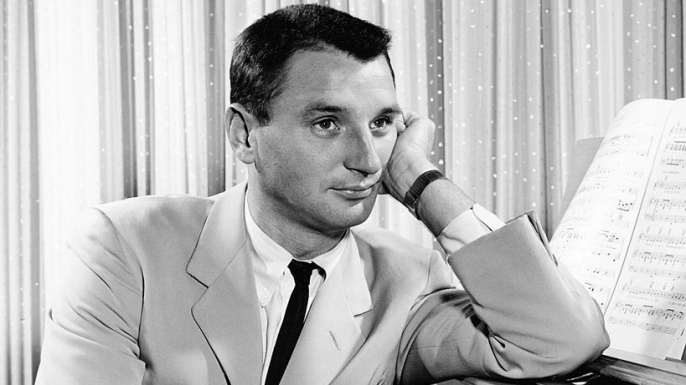
In 1946, singer Nat King Cole had a hit single with “(Get Your Kicks on)
Route 66,” written that same year by Bobby Troup. A Pennsylvania
native, Troup composed his first hit song while still in college then
went on to serve in the Marines during World War II. After the war, he
returned to the U.S. and drove to Hollywood with his wife to try to make
a career as a songwriter. While traveling on Route 66, he was inspired
to start penning the lyrics for a tune about the roadway. Once in
California, he was introduced to Nat King Cole, who soon recorded
Troup’s song, which namechecks places the road goes through. Troup’s pop
anthem to Route 66 went on to be recorded by scores of artists,
including Bing Crosby and the Rolling Stones.
6. African Americans were barred from some businesses along Route 66
During the segregation era, African Americans were banned from many
motels, restaurants and other businesses along Route 66. A number of
“sundown towns” bordered the highway, communities where blacks were
unwelcome after dark and kept out through intimidation, force and local
ordinances. In 1936, Victor H. Green, a black postal worker from New
York City, started publishing the “Negro Motorist Green Book,” a travel
guide featuring places to stay, eat and shop that were friendly to
African Americans. The Green Book series continued to be published until
1966.
7. A TV series was named for the legendary highway
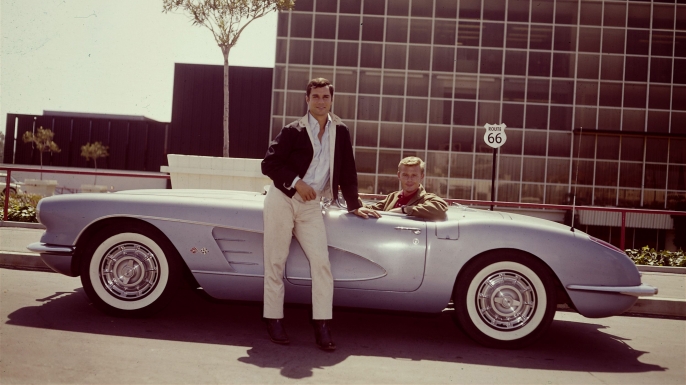
“Route 66,” a TV drama about two young men who wander America in a
Corvette, aired from 1960 to 1964. During their travels, the two
drifters, originally played by Martin Milner and George Maharis,
encounter a broad variety of characters, and the show featured guest
stars ranging from Joan Crawford to a young Robert Redford. Despite the
program’s name, it ventured beyond Route 66 and was shot on location in
more than 20 states and Canada; the real-life Route 66 passed through
eight states.
8. Dwight Eisenhower is linked to its demise
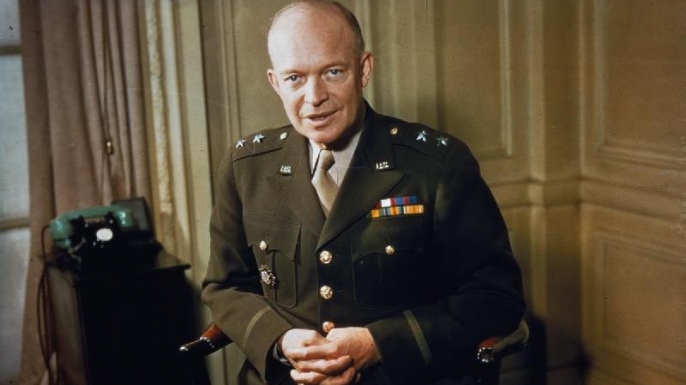
In 1956, President Eisenhower signed the Federal-Aid Highway Act, which
established America’s 47,800-mile Interstate Highway System and
eventually led to Route 66 becoming obsolete. Eisenhower first became
aware of the need for better highways in 1919, when he participated in a
U.S. military motor convoy from Washington, D.C. to San Francisco.
Intended to test what it would be like to move an army across the
country, the journey took 62 days. Then, during World War II, he
witnessed the strategic advantages of Germany’s autobahn highway
network. As president during the Cold War era, Eisenhower advocated for
an interstate highway system, touting it as beneficial for military
defense operations as well as for the nation’s economic growth.
Interstate 40 subsequently replaced a large segment of Route 66 and the
roadway was decommissioned in 1985. However, in the aftermath, a variety
of non-profit groups were formed to help preserve the historic highway
and much of Route 66 remains drivable today.
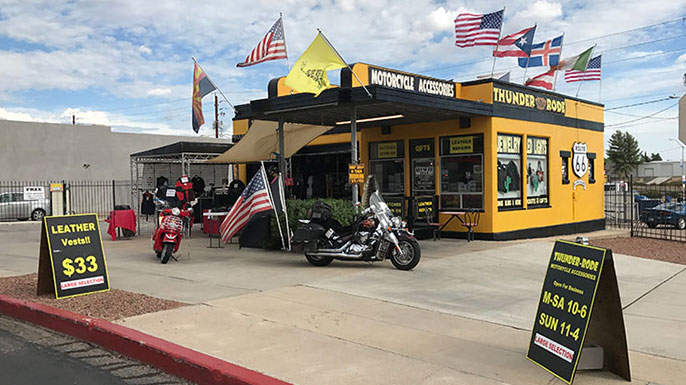
We Hoped you enjoyed these 8 facts about route 66 that history.com shared with us. If you ever find yourself driving down the mother road and you are nearing Kingman Az, make sure to stop by Thunder Rode and check our wares for souvenirs and great biker gear.